An expert helps the court understand specialist evidence
An expert witness brings specialist knowledge to a legal issue and explains an independent opinion supported by evidence. The role is to assist the court, not to advocate for the party paying the fee. Professional expertise is the starting point; clear reporting, impartial judgement and knowledge of the applicable procedure are separate skills to develop.
Expert witnesses in the UK: expertise, evidence and opportunity
A practical guide for professionals considering expert-witness work and people who need to understand it. Explore specialist fields, court duties, training, fees and the questions that make an instruction workable.
Published by UK Domain Trader. Sources checked 8 October 2026. Independent editorial guidance, without professional review. Official rules and professional-body guidance are identified separately; use the applicable current rules for any instruction.
Find practical answers ↓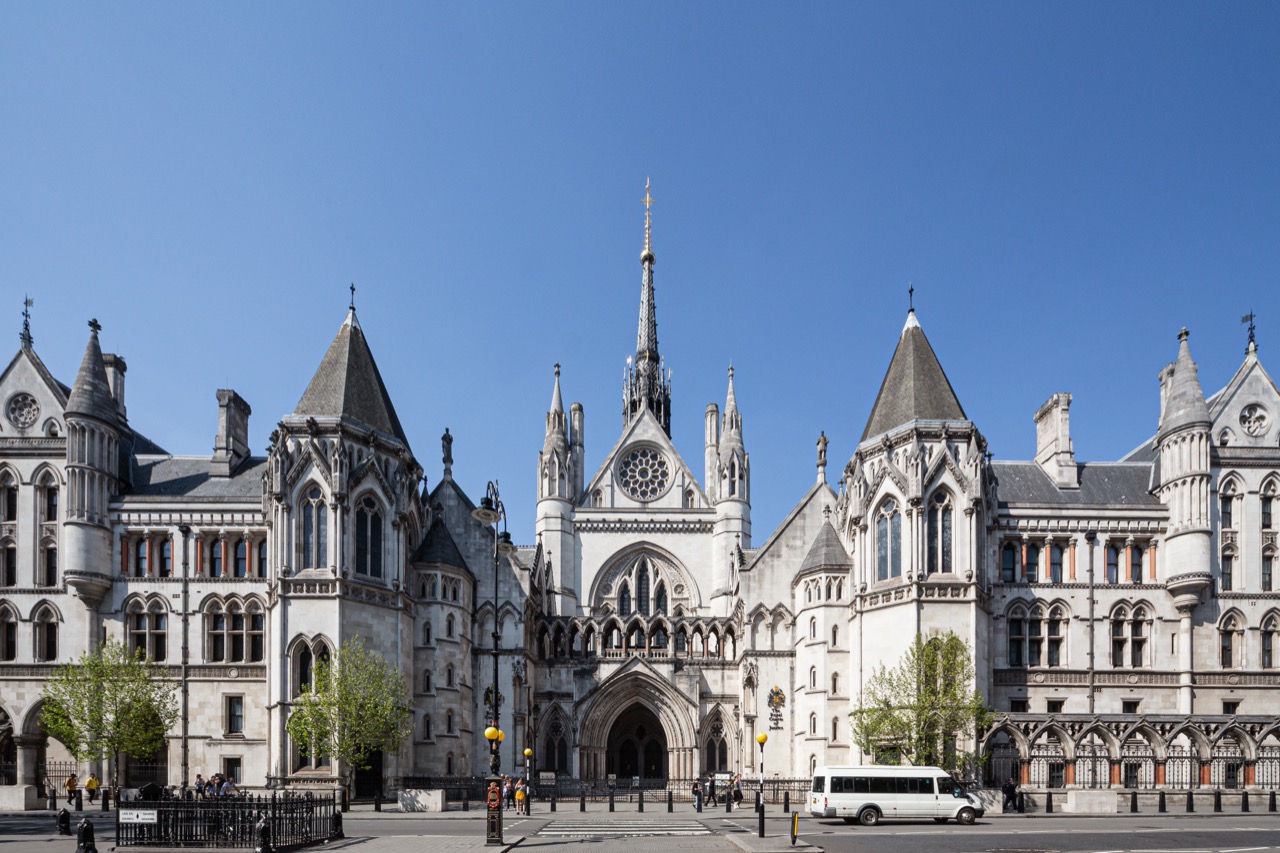
What expert witnesses do, and how the role differs
A factual witness describes relevant matters they observed. An expert witness applies specialist knowledge to questions that call for expert opinion. The distinction is about the evidence and its purpose, not simply the witness's job title. A professional may have relevant factual knowledge without being instructed as an expert.
Work can include reviewing records, examining a site or person within the appropriate remit, testing hypotheses, preparing a report, answering questions and giving oral evidence. Some cases settle without a hearing, so the work is not limited to appearances in court.
In England and Wales civil proceedings, CPR 35 restricts expert evidence to what is reasonably required and sets out the overriding duty to the court. The rules also address permission, reports and single joint experts. Check the applicable procedure before treating an expert report as evidence that can automatically be used.
Fields in which specialist evidence may be needed
Medical and healthcare experts may address clinical standards, injury or prognosis within their particular competence. Psychologists and psychiatrists may address defined mental-health or behavioural questions. Accountants and valuation specialists may analyse financial records, loss or asset value. Engineers, surveyors and construction specialists may investigate design, defects or causation.
Other areas include digital forensics, cybersecurity, document examination, toxicology, accident reconstruction, environmental science, agriculture and specialist industry practice. These are illustrative fields, not a list of professions approved for every case.
Choose a narrow description of expertise. Experience in general construction does not establish competence in every structural failure, and professional registration alone does not prove familiarity with a disputed technique. Match the issue to demonstrable knowledge, current experience and a reliable approach.
Which rules apply across the UK?
England and Wales civil cases use CPR Part 35 and its practice direction. Family proceedings have their own framework in Family Procedure Rules Part 25 and associated directions. Criminal proceedings use Criminal Procedure Rules Part 19, with requirements relevant to that setting. Do not apply a civil-report template to a different court without checking it.
Scotland has a separate legal system. Kennedy v Cordia, a Scottish appeal decided by the UK Supreme Court, discusses expert evidence and considerations such as assistance to the court, knowledge and experience, impartiality and a reliable basis. Northern Ireland also has its own rules, practice directions and court-specific requirements.
Identify the jurisdiction, court, proceedings and current order at the start. Sector-specific and case-specific requirements may add to the general framework. The linked materials are a route into the rules, not a substitute for the instructing legal team checking what applies.
How to become an expert witness
Begin with genuine specialist competence: relevant qualifications where applicable, substantial practical knowledge and evidence of the work you can explain. Prepare an accurate CV that identifies your field, current experience, professional status and the limits of your expertise. There is no single course certificate that makes someone suitable for every instruction.
Develop the additional skills: procedural duties, independent analysis, report writing, expert discussions and responding to questioning. The Expert Witness Institute offers a competency framework and training resources. Its membership and training requirements are its own standards; they should not be confused with universal court approval.
Build a development plan: define your field, assess gaps, learn the relevant procedure, practise a clearly labelled training report and obtain suitable feedback or mentoring. Then establish realistic capacity, insurance arrangements and terms before accepting work. Training complements expertise rather than replacing it.
An instruction should pass a competence and conflict check
Before accepting a case, ask what opinion is needed, whether it falls within your current expertise and whether any relationship or prior work creates a conflict. Check the parties, relevant organisations and any issue that could affect independence. Raise concerns with the instructing team rather than assuming a disclosure can solve every problem.
Clarify the questions, materials, deadlines, examination or inspection arrangements, reporting requirements and funding. Ask which permissions or orders are relevant. Agree how missing information and changes of scope will be handled.
A useful intake checklist is: competence; conflicts; jurisdiction; questions; evidence; timetable; fee basis; and capacity. Declining an unsuitable instruction is a professional decision, not a failure to establish a practice. Do not accept an instruction on the basis that the opinion will support a predetermined outcome.
Use the practical checklist below to record the decision, documents needed and unanswered questions before accepting work.
Write a report that makes the reasoning auditable
Separate facts, assumptions, methodology and opinion. Explain what information was available, what was missing and how limitations affect the conclusion. Identify the basis for disagreements and any range of reasonable opinion rather than presenting uncertainty as certainty.
For England and Wales civil reports, Practice Direction 35 sets out requirements including qualifications, relevant material, instructions, reasoning and declarations. The correct wording and structure depend on the current rules and context. A template is a prompt for compliance checks, not a way to avoid understanding the duty.
Keep records that support your analysis and be prepared to explain the reasoning in ordinary language. If material information changes your opinion, communicate the change appropriately. The aim is a conclusion that can be examined, not a document shaped to please the person who instructed it.
Fictional example: a bundle contains a photograph of a ceiling stain and a contractor's note that a roof repair took place. The record is that the photograph and note exist; an assumption might be that they concern the same property and period. The cause of the stain remains an opinion question. A careful analysis would identify missing dates, inspection findings and alternative explanations rather than treating the repair note as proof of causation. This illustrates reasoning, not a diagnosis or a completed expert report.
Fees: agree the work, not just the hourly rate
A quote should identify what the fee covers: reading, assessment, analysis, reporting, questions, meetings, preparation, attendance and any relevant expenses. Discuss cancellation or reservation terms, VAT where applicable, invoice timing and who is responsible for payment. An attractive hourly figure says little without the scope and expected time.
Private instructions and legally aided cases have different funding considerations. Legal Aid Agency guidance includes rates, prior authority and rules for particular expert types. Those figures are not a national private-market price list, nor a forecast of an individual expert's earnings. Check the current funding arrangements before committing to work.
EWI's fees guidance is a useful starting point for practice administration. Keep the commercial arrangement separate from the independence of the opinion: a higher fee or repeat client must not change the evidential conclusion.
Earnings potential: model revenue and take-home separately
Expert-witness work may form part of an employed role or a separate practice. For a business, revenue depends on chargeable hours, agreed fees and payment actually collected. Workload can be uneven, cases may settle and deadlines may constrain other professional work. An employer's fee income is not necessarily the employee's personal pay.
Three invented planning scenarios show the arithmetic: 250 chargeable hours at £125 gives £31,250 gross fee revenue; 500 hours at £200 gives £100,000; 750 hours at £200 gives £150,000. These are not observed UK market rates, salaries or typical outcomes. They illustrate how assumptions change the result.
Allow for uncharged administration, training, insurance, subscriptions, equipment, travel, cancellations and tax. In the middle example, £20,000 operating costs leaves £80,000 before tax and other adjustments. If total working time is 850 hours, that balance is about £94.12 per working hour. VAT collected, where applicable, is not personal income. Use your actual expected rates, capacity and costs to create a cautious plan.
For your own estimate, write down: chargeable hours x agreed rate = gross fees; subtract operating costs to estimate the balance before tax; divide by all working hours to understand time commitment. Keep a separate cash schedule for when invoices are expected to be paid. Check cancellations, funding limits and collection assumptions before treating a projection as available income.
Choosing an expert: questions for the instructing team
Define the disputed issue before looking for a name. Ask about relevant current practice, experience of the specific question, report-writing competence and familiarity with the jurisdiction. Verify qualifications or registration where the work requires them, and discuss any limits rather than assuming a broad title covers the whole case.
Request an accurate CV, availability and a scoped estimate. Check conflicts and how the expert will deal with missing evidence, alternative explanations and changes of opinion. A directory listing or membership badge can support initial research, but is not a guarantee that a person is suitable for a particular instruction.
Do not select an expert because they promise a favourable conclusion. Independence and a clear evidential approach are more useful than assurances about winning. This website provides information; it is not an expert panel or referral service.
About this guide: UK Domain Trader publishes this independent resource. Legal requirements are linked to official rules; training and practice information is identified separately as professional-body guidance. Examples are labelled fictional, and fee calculations are not surveys. Corrections can be submitted using the form below. Sources and research dates are available in the attribution section; dates change when content is actually reviewed or revised.
Is expert-witness certification compulsory?
Requirements depend on the field, jurisdiction and proceedings. Specialist qualifications or registration may matter, and professional organisations offer training, membership and certification. Those schemes do not establish universal suitability or replace the court's control of expert evidence. Check the current requirements for the actual instruction.
Does an expert always have to attend court?
No. Reports, clarification questions or other stages may be sufficient, depending on the proceedings and directions. Be prepared for attendance if required and agree its practical and fee arrangements early. Do not assume that accepting a report instruction rules out giving oral evidence.
FURTHER READING
Expert witness resources and checklists
Expert witness preparation checklist: instructions, evidence and reports
Use this planning checklist to identify the question, check suitability, organise evidence and review your reasoning. Keep the actual court rules and instruction alongside it.
Independent, and open to better information.
This guide is published by UK Domain Trader. It is an introductory resource, not personalised professional advice or an endorsement by the organisations listed. Links are included to help you find reliable information. No business has paid for an editorial mention in this guide. Know a useful resource, or spotted something that needs correcting? Tell us below.
Research sources and image attribution
- Civil Procedure Rules Part 35 · researched 2026-10-08
- Civil Practice Direction 35 · researched 2026-10-08
- Family Procedure Rules Part 25 · researched 2026-10-08
- Criminal Procedure Rules Part 19 · researched 2026-10-08
- UK Supreme Court: Kennedy v Cordia · researched 2026-10-08
- EWI Northern Ireland rules and directions · researched 2026-10-08
- EWI becoming an expert witness · researched 2026-10-08
- EWI competency framework · researched 2026-10-08
- EWI core training · researched 2026-10-08
- EWI fees guidance · researched 2026-10-08
- Legal Aid Agency expert-witness guidance · researched 2026-10-08
Photograph: David Castor / Wikimedia Commons. Original and rights information. CC0 1.0. Displayed without alteration; the responsive layout may crop its visible area.
MAKE A CONNECTION
A distinctive name.
Your next idea.
witness.org.uk is listed with UK Domain Trader. View the current asking price and purchase options on the marketplace, or send a buying enquiry.
View witness.org.uk ↗Your privacy
UKC LABS LTD, trading as UK Domain Trader, operates this guide. The enquiry form sends your name, email, message and enquiry type to our central inbox so we can respond. These details are not published or sold. Enquiries are retained for up to 365 days unless a longer period is needed to handle an ongoing request or legal obligation. We process enquiries to respond to your request and administer our business; ticking the acknowledgement does not subscribe you to marketing.
We count page requests and useful-link clicks without visitor tracking cookies. Security controls use short-lived pseudonymous rate-limit records, and server security logs may contain IP addresses. To request access, correction or deletion of your information, use the contact form and select correction, or visit UK Domain Trader’s privacy policy. This form is not an emergency or public-service reporting channel.